French food
Bistro, bistrot, brasserie, bouillon: what is the difference?
A bistro (also spelled bistrot in French) is a small place serving simple everyday food, a brasserie is a larger restaurant with roots in brewing that often serves all day, and a bouillon is a big, cheap canteen of the kind Paris has known since the 19th century.
In Paris you will see all four words above the doors of places serving French classics. They differ in size, origin and price. Some serve hot food only at lunch, others from midday until late in the evening.
Bistro: a small place for every day
A French bistro is a small place with a counter and a few tables, often family-run. The short menu is usually chalked on a board and changes with the season and the shopping: a soup, the dish of the day (plat du jour), steak and fries, cheese and a dessert. Typical dishes are the ones a cook can make ahead in a big pot, like bœuf bourguignon, or put together in a few minutes, like a croque-monsieur or a steak haché. People come for lunch from work and in the evening for a glass of wine.
Bistro or bistrot?
It is the same word in two spellings. In France you will see bistrot more often, while the rest of the world took up the shorter bistro. A popular legend explains where it comes from: Russian soldiers who occupied Paris in 1814 supposedly shouted “bystro!”, Russian for quickly, at the waiters. A restaurant in Montmartre has a plaque about it. Linguists do not believe it, because the word only appears in writing at the end of the 19th century, some seventy years later. They think a French dialect origin more likely, perhaps the word bistouille, which in northern France means cheap liquor or coffee with a shot of brandy.
Brasserie: from beer to the big dining room
Brasserie is French for brewery. These started out as places attached to breweries, where food came with the beer. Many of the Paris brasseries were opened by Alsatians, especially after 1871, when Alsace passed to Germany and some of its people moved to Paris. From Alsace comes choucroute, sauerkraut with sausages and smoked pork, which brasseries still serve today. The menu usually also has oysters and seafood platters, or steak and fries. A brasserie is bigger than a bistro, with a longer menu, and it often serves hot food without a break from lunch until late in the evening.
Bouillon: the cheap canteen of the 19th century
Bouillon means broth. In the mid-19th century, Parisians began using the word for big, cheap canteens where workers ate boiled beef and its broth. The first is usually said to be the one opened by the butcher Duval in 1855, which later grew into a whole chain. The best known, Bouillon Chartier, has been open since 1896: a huge dining room, waiters who write the bill straight onto the paper tablecloth, and often a queue outside. Since Bouillon Pigalle opened in 2017, the format has been coming back. The new places cook the same classics at low prices: œuf mayonnaise (egg with mayonnaise), onion soup or bœuf bourguignon.
So which one is Saint Paul?
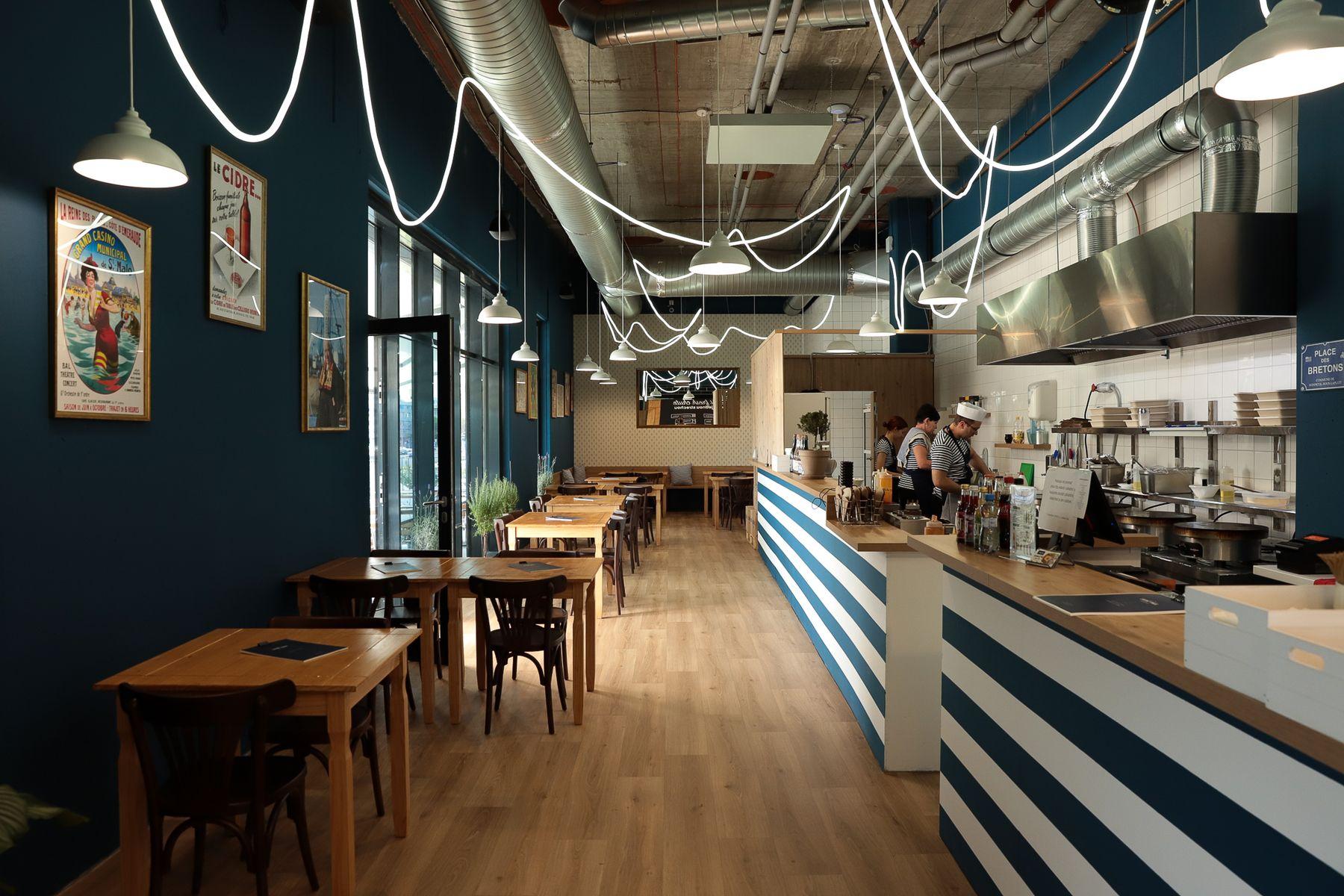
Saint Paul is a small bistrot in the Fresh Market food hall, 1st floor, Rožňavská 1a, near Trnavské mýto. We used to present ourselves as a crêperie; today we are Saint Paul Bistrot. At lunch, from 11:00 to 14:00, we cook onion soup, croque-monsieur, steak haché with black pepper sauce and bœuf bourguignon. Alongside them we make Breton galettes from 100% buckwheat and sweet crêpes. The Menu Classic (€8.90) pairs a Classic galette or a croque-monsieur with the soup of the day or a crêpe, and the Menu Bistrot (€14.90) does the same with steak haché or bœuf bourguignon. No reservation needed. If you come as a larger group, call us on 0905 118 276.
On a French bistro chalkboard you will often see the word formule. It means a set-price menu, for example the dish of the day with a starter or a dessert.
Frequently asked
- What does the word bistro mean?
- A bistro, also spelled bistrot in French, is a small place with simple food at fair prices, where people go for lunch or a glass of wine. Nobody is sure where the word comes from. A legend links it to the Russian bystro (quickly), but linguists consider that unlikely.
- What is the difference between a bistro and a brasserie?
- A bistro is smaller, has a short menu and often cooks only for lunch and dinner. A brasserie is bigger, grew out of breweries, has a longer menu and often serves hot food all day.
- What is a bouillon in France?
- A big, cheap, popular restaurant. The first ones opened in Paris in the mid-19th century and took their name from the broth and boiled beef they served. The best known, Bouillon Chartier, has been open since 1896.
- Is Saint Paul a bistro or a crêperie?
- Both. At Saint Paul Bistrot in Fresh Market we serve onion soup, croque-monsieur, steak haché and bœuf bourguignon at lunch from 11:00 to 14:00, and we still make Breton buckwheat galettes and sweet crêpes.
Rather taste than cook?
Bistrot lunch, galettes, crêpes and Sorre cider: Fresh Market, 1st floor, Monday to Saturday.