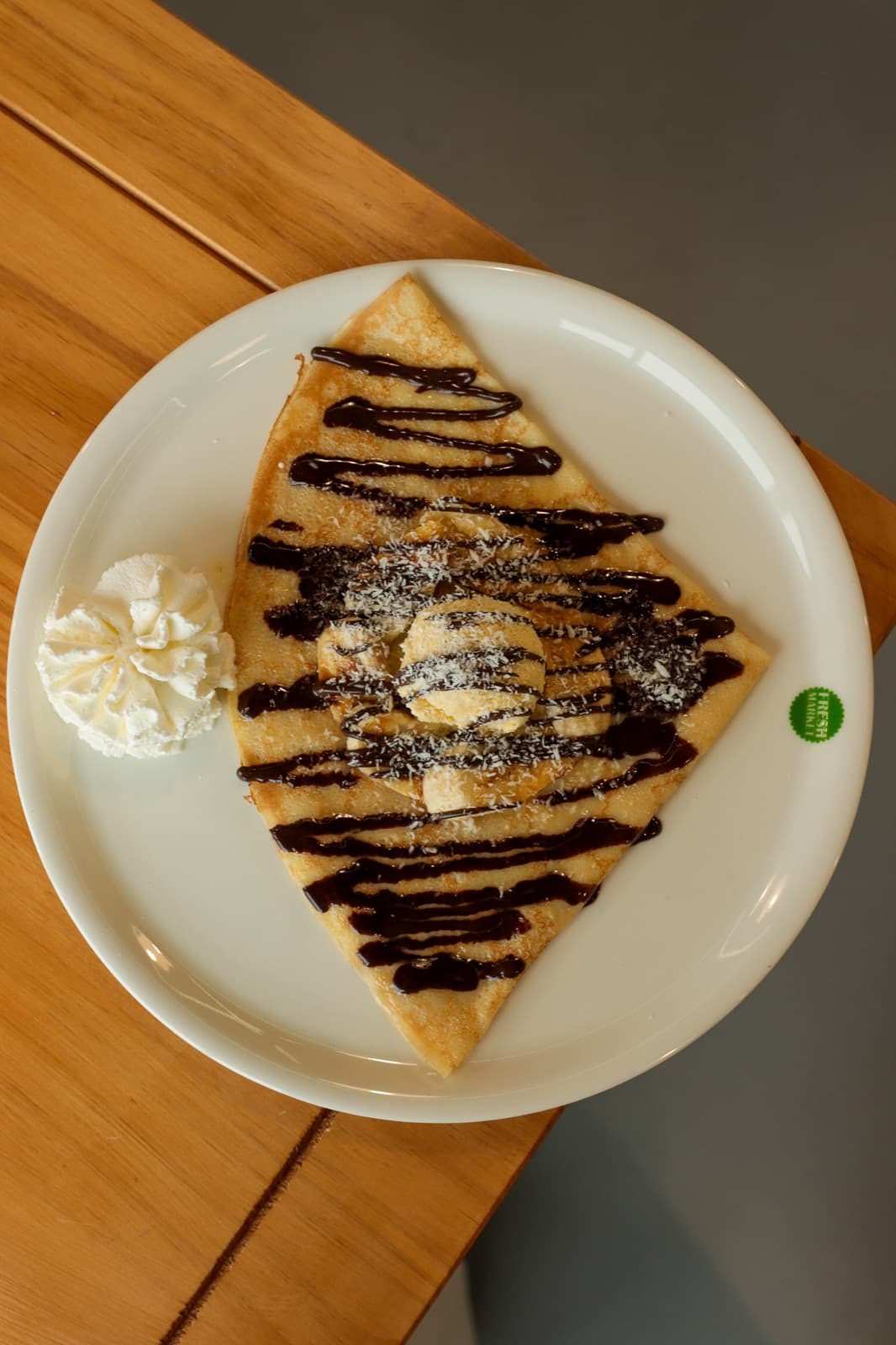
Galettes & crêpes
French crêpes — the real sweet batter
A proper French sweet crêpe batter needs only flour, eggs, milk, a pinch of salt and a little butter — plus an hour of rest so the crêpes turn out thin and silky.
- Prep
- 10 min
- Cook
- 3 min
- Rest
- 60 min
- Total
- 73 min
- Servings
- 4
- Difficulty
- Easy
Sweet crêpes are nothing like thick pancakes. The batter should be thinner than you expect, and it smooths out as it rests. We also make them in a buckwheat, gluten-free version on request.
Method
- 01
Sift the flour with the sugar and salt. Make a well, add the eggs and whisk them in gradually.
- 02
Pour in the milk a little at a time, whisking to a smooth, thin batter. Finally whisk in the melted butter and vanilla.
- 03
Cover and rest at least an hour at room temperature. Do not skip this — the crêpes come out more tender.
- 04
Heat the pan, grease it lightly. Spread a ladle of batter thin, flip after a minute and cook the other side.
- 05
Serve with house salted caramel, sugar and lemon, or jam. Our favourite: La Bretonne — salted caramel and whipped cream.
The first crêpe is always the sacrifice, until the pan settles to temperature. Do not despair.
The right consistency: the batter should coat the back of a spoon in a thin, even layer. If it is thick, loosen it with milk.
Stack the finished crêpes on a plate under a clean tea towel — they stay warm and supple even for the tenth guest.
Frequently asked
- What is the best crêpe batter?
- Thinner than the Slovak habit: 250 g flour to 4 eggs and half a litre of milk, with butter and an hour of rest. No raising agent — crêpes should be thin, not fluffy. The exact ratio is in the recipe above.
- How do French crêpes differ from Slovak palacinky?
- French crêpes use a thinner batter with no raising agent, more eggs and butter, and the batter is rested. The result is thinner, more delicate and crisp at the edges — a palacinka is thicker and softer.
- Why rest the crêpe batter?
- The flour hydrates and the gluten relaxes. The crêpes stop tearing, come out more tender and spread better in the pan. An hour is enough; overnight in the fridge is ideal.
- Can French crêpes be made gluten-free?
- Yes — swap the wheat flour for 100% buckwheat, as in Breton galettes. At Saint Paul we make sweet crêpes in a buckwheat version on request.
- What is the best pan for crêpes?
- A low, heavy-based crêpe pan over medium heat. Steady temperature matters more than the pan itself — and only a thin film of fat.
Rather taste than cook?
We cook galettes and crêpes and pour cider every day at Fresh Market.